New announcement. Learn more

ResearchTeamAdvocacyHistoryDCSS auditCommunityBoardConferencePostersType 2 diabetesGardens4healthHealth promotionHealthy eatingIn the NewsNZSSDBOTPrimary careDPTEducationPublicationResources2024CMDHBLifestyle ProgrammeG4HGardeningNew medicationNutritionPreventionAnnual Activity ReportHealth educationSummitPHARMACSchoolsCollaborationEquityInequityEthnic disparitiesGetwize2healthYouth2025PresentationSouth AucklandType 1 diabetesWorkplacesCommunity gardenKidney diseaseLets Beat Diabetes2023DataDisparityGDMHealth & WellnessMedicationNZ Nutrition FoundationNZNFProgrammeWDDWorld Diabetes DayBrandingCongratulationsDiabetes In PregnancyGestational DiabetesGovernanceOtaraStaffBariatric projectCGMDcssIDFMaoriPhDResearch FellowTe Tiriti O WaitangiThe Treaty of Waitangi20132022AdolescentBarriersEventHealthy environmentPublic healthRenalThank you2010CMHInequalilitiesMedicationsNurse PractitionerPacifikaPartnershipQualitativeWORTH study20112016AccessCampaignCelebrationCook'n KiwiCovid-19ExerciseGW2HLBDMiddlemoreNutrition FoundationNZMJOutcomesQuality AuditRecruitmentReportSADPSouth Auckland Diabetes ProjectWhakatauki20142021AdolescentsArticleBariatric SurgeryCookingEpidemiologyJust CookMedical directorMyLifeMattersObesityPatient perspectivePrecision medicinePregnancyQuality improvementThrowbackTrulicity2004200520082009201521 yearsAged careAuckland CouncilAwardCounties ManukauDiabetes NZEvaluationFIZZFundraisingGPJardianceKaumatuaMāoriPhysical activityPilotPodcastPVAResilienceSocioeconomic disparitiesSportsSugarSugarbustersTrain the TrainerVegetablesVision200120062007201720182019AbstractAuditBreast feedingCardiovascular diseaseChristmasComplicationsDCSS PublicationDebateDiabetes awarenessDiabetes resourcesDulaglutideEnvironmentHealthy AgingInformation sheetsInsulinMaraeMasterClassMITMortalityMulti-ethnicMy Life MattersOffice hoursOlder personPatient Voice AotearoaPolicyPre-DiabetesProfessional developmentRegistrySafetyStrategySurveyTe ReoThe renew roomVideoWebsitesWhitiora2000200320122020AimAucklandAustraliaAwarenessBlood pressureCapacity buildingContinuous Glucose MonitoringDiabetesDiabetes preventionDonationEthicsFairnessGLP1 receptor agonistGoutHeart failureHolidayIGTImpaired Glucose ToleranceInterviewIronmanKate SmallmanMotivationOrganicPacifickaPerformancePetitionPlanningPlant BasedREPORT studyRiskRole modelRotaryScience festScreeningSGLT2 InhibitorShop for your lifeSpecial KSponsorsSugar taxSupport GroupsTalanoa approachTe Whatu OraTikanga MāoriTrust DeedValuesVegetarianVLCDWorkplace exercise1992199419961997199820022026AbsenteeismActivatorsAdult nutritionAdvisorAllergiesANZMOSSAtrial FibrillationBabyBeneficiaryBequestBMC MedicineBudgetCanadaCancerCCRepChild healthCholesterolCity MissionClimate actionClimate changeCo-designCODAComicConsultationContinuous Glucose MonotiringDementiaDeterminants of healthDiabetes EducatorDialysisDietitianDifferent DinnersDining outDirectoryDiversityDKDDoor-To-Door studyDry weather gardeningEATucationEnablersESRDEvluationExcellence awardEye ScreeningFAQsFast foodFood literacyFood povertyFood securityFood sovereigntyFootcareFree trainingGreen Lip MusselsGuidanceHATHealth literacyHealthy Auckland TogetherHealthy psychologyHealthy TuckshopsHigh-risk populationHOPE programmeHua parakoreHyperglycaemiaIFGIn printInfantsInnovationInsulin pumpsJAHAJournalJournal of American Heart AssociationKidney SocietyKnowledgeLanguageMāraMātanga TapuhiMedirayMental healthMisinformationNewletterNGONoMoreFearNurse ledNurse PrescriberNutritionistNZ Health SurveyNZOTYOlder agegroupOpening hoursOverweightPassport studyPatient satisfactionPānuiPhotographsPost covidPresenteeismProvidersPumpsPush-playQuantitativeRandomised control trialRangatahiRCTRecipeRheumatic Heart DiseaseRichard cooperRoadshowRocketsparkSatisfactionScabiesStakeholdersStandardsStigmaStocktakeStudent nurseSummerSustainableTamaki MakaurauTechnologyTika TunuTongaTravelTriathlonTuckshopsUpdateWater conservationWeight lossWhanauWomenWork experienceWorld Health Organisation
TAGS

Poster - NZSSD - Gardens4Health 15 years on

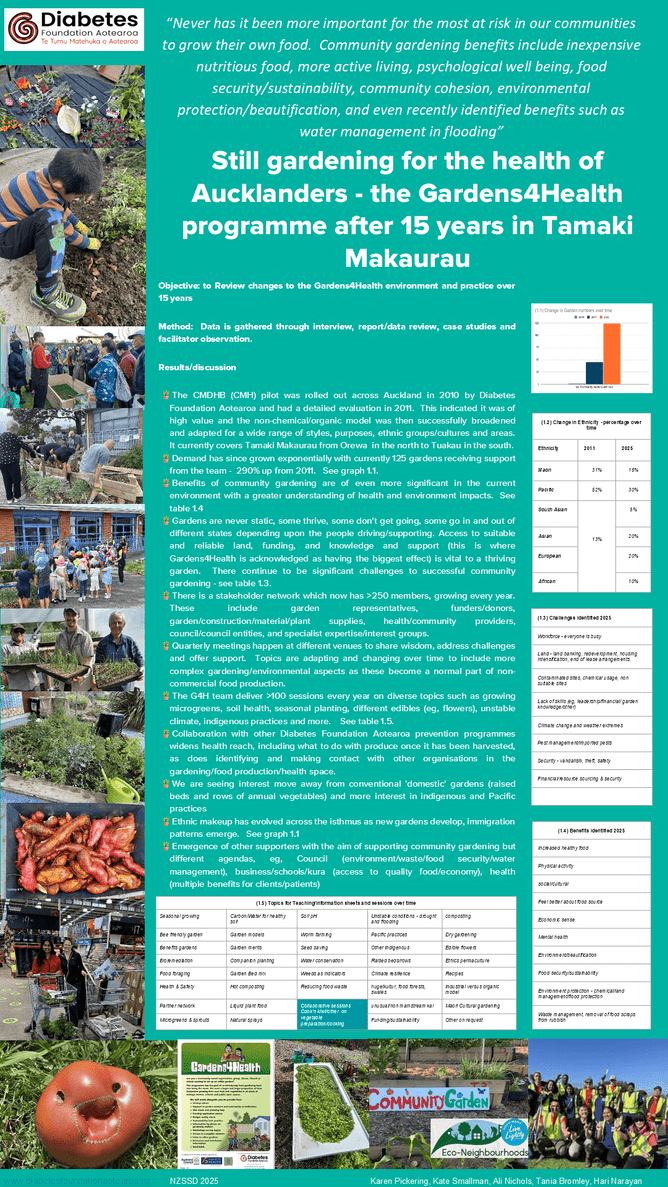
Gardens4Health started thanks to the Counties Manukau DHB back in 2009.   Diabetes Foundation Aotearoa (then Diabetes Projects Trust) took the project, with just two gardens back then, on and prepared it for rolling out across Tamaki Makaurau.   We have presented on the progress over the years at various conferences and seminars, and this time we went back to NZSSD to give a taster about what had changed in the intervening years.   Karen Pickering presented an e-poster and oral poster on behalf of the Gardens4Health team, Ali McGill, Tania Bromley and Hari Narayan.     

Abstract as accepted by NZSSD in February 2025 below:

Introduction

Never has it been more important for the most at risk in our communities to grow their own food.  Community gardening benefits include inexpensive nutritious food, more active living, psychological wellbeing, food security/sustainability, community cohesion, environmental protection/beautification, and even recently identified benefits such as water management in flooding.

Gardens4Health was a CMDHB pilot which was rolled out across Auckland in 2010 by Diabetes Foundation Aotearoa. Demand has since grown exponentially.

Currently 124 gardens receive support from the team.    There is a stakeholder network which has >250 members.  Quarterly meetings happen at different venues to share wisdom.    The G4H team deliver >100 sessions on diverse topics such as growing microgreens, soil health, seasonal planting and much more.   Collaboration with other Diabetes Foundation Aotearoa prevention programmes widens health reach.

Objective

Review changes to the Gardens4Health environment and practice over 15 years

Methods

Stakeholder interviews, report/data review, case studies.

Results/Discussion

A 2011 evaluation identified a range of skills needed in community gardening, including financial, technical, teaching, safety and more.    These skills remain fundamental with some updates.   Garden makeup evolves over time, with increasing ethnic diversity and changing age ranges.  Matauranga Māori and expertise from other cultures expands, as do new understandings of technical and organic best practice. There are practical challenges including sourcing heritage/suitable/affordable material for propagation, complex land arrangements (particularly with contamination, land banking and high density housing projects) and people are even more time poor and financially tight than they have ever been.