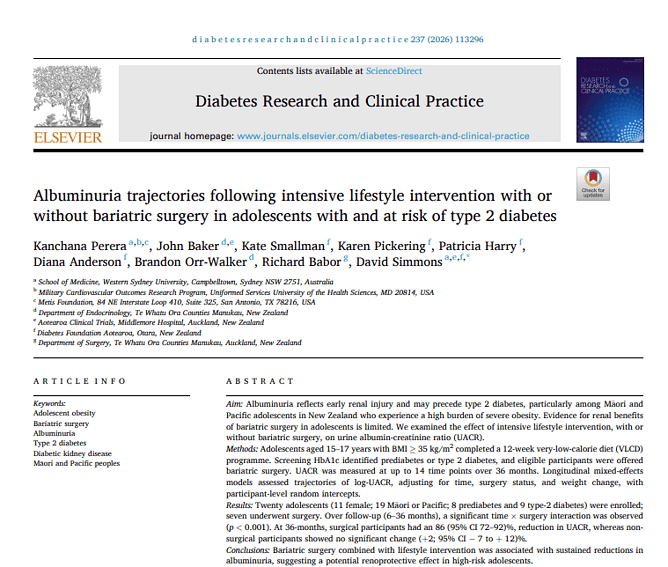
Another paper published from Kanchana Perera et al from the Bariatric youth study providing intensive lifestyle support to a group of youth with or at risk of type 2 diabetes. See original here
Abstract directly from the paper "Aim Albuminuria reflects early renal injury and may precede type 2 diabetes, particularly among Māori and Pacific adolescents in New Zealand who experience a high burden of severe obesity. Evidence for renal benefits of bariatric surgery in adolescents is limited. We examined the effect of intensive lifestyle intervention, with or without bariatric surgery, on urine albumin-creatinine ratio (UACR).MethodsAdolescents aged 15–17 years with BMI ≥ 35 kg/m2 completed a 12-week very-low-calorie diet (VLCD) programme. Screening HbA1c identified prediabetes or type 2 diabetes, and eligible participants were offered bariatric surgery. UACR was measured at up to 14 time points over 36 months. Longitudinal mixed-effects models assessed trajectories of log-UACR, adjusting for time, surgery status, and weight change, with participant-level random intercepts.ResultsTwenty adolescents (11 female; 19 Māori or Pacific; 8 prediabetes and 9 type-2 diabetes) were enrolled; seven underwent surgery. Over follow-up (6–36 months), a significant time × surgery interaction was observed (p < 0.001). At 36-months, surgical participants had an 86 (95% CI 72–92)%, reduction in UACR, whereas non-surgical participants showed no significant change (+2; 95% CI − 7 to + 12)%.ConclusionsBariatric surgery combined with lifestyle intervention was associated with sustained reductions in albuminuria, suggesting a potential renoprotective effect in high-risk adolescents.
Keywords
Adolescent obesity
Bariatric surgery
Albuminuria
Type 2 diabetes
Diabetic kidney disease
Māori and Pacific peoples"